
Is Duolingo Actually Effective for Fluency or Just Gamified Vocabulary?
A critical analysis of why high engagement on language apps rarely results in conversational ability and the structural limitations of gamified learning.

The green owl stares at you from your lock screen, its wide eyes judging the silence of the last twenty-four hours. For millions of users in 2026, the notification is not a reminder to learn, but a trigger to perform a daily ritual to protect a "streak." This behavioral loop is the engine behind one of the most popular educational platforms in history. Yet, a growing disconnect exists between the metrics of the app—XP, leagues, and streaks—and the actual proficiency of its users.
If you have spent six months tapping on colorful buttons but still freeze up when a barista asks for your order in Paris, you are not alone. The problem lies not in your effort, but in the fundamental design of the tool. Gamified language platforms have mastered the art of user retention, but retention is not the same as acquisition. To understand why fluency remains elusive, we have to dissect the mechanics of how these apps teach and how our brains actually encode language.
The Dopamine Loops That Mimic Competence
The primary issue with relying solely on gamified platforms is that they are designed to maximize "time on device" rather than "time in target language." The interface utilizes a variable reward schedule, a psychological concept borrowed from slot machine design. You complete a lesson, you hear a satisfying chime, and you see a progress bar fill up. Your brain releases dopamine, chemically reinforcing the behavior of opening the app.
This creates an illusion of competence. When you breeze through a set of exercises, the feedback loop tells you that you are learning. However, you are likely engaging in "recognition" rather than "recall." The app presents you with three or four options, often including images or English cognates that give away the answer. You are not retrieving the Spanish word for "bread" from your memory; you are identifying the correct pattern among visual cues. This is a low-friction cognitive process that does not build the neural pathways required for spontaneous speech.
I have analyzed dozens of productivity apps for Freenapps, and the ones that truly work usually make the user struggle a bit more. Growth happens in the difficulty spike, but gamified apps are engineered to smooth out the spikes to keep you happy. You feel like a genius while playing, but you remain a novice when the game turns off.
Context Collapse in Translation-Based Mechanics
Language is not a collection of interchangeable blocks; it is a complex system dependent on nuance, tone, and context. Gamified apps almost exclusively rely on translation-based exercises. You see "The man eats the apple," and you tap the corresponding blocks. This works fine for basic nouns and verbs, but it collapses completely when dealing with idioms, formal address, or cultural nuances.
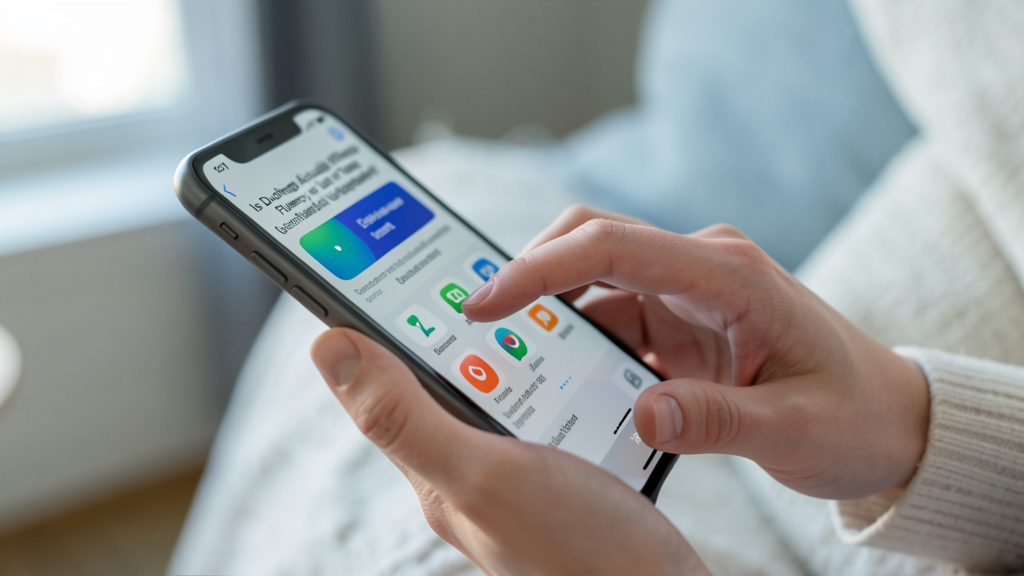
Furthermore, the curriculum often decontextualizes sentences. You might be asked to translate "The bear wears a shirt" or "I am a plastic spoon." While these sentences are grammatically correct, they occupy valuable memory space without teaching you how to ask for directions or express an opinion. In 2026, with access to vast corpora of real human speech, using sentence fragments that would never occur in real life is a pedagogical failure.
This "sentence mining" approach lacks the friction of real conversation. In the real world, you do not have four multiple-choice options when someone speaks to you. You cannot listen to a sentence three times at half-speed. By shielding the user from the ambiguity and messiness of natural language, these apps fail to train the listening comprehension skills necessary for fluency.
The Passive Input Crisis
Fluency requires output. You must speak, write, and formulate your own thoughts. Most gamified platforms treat speaking as an afterthought. There might be a "speak this sentence" exercise, but the voice recognition technology, while improved in recent years, is still notoriously lenient. You can mumble a approximation of the phrase and the system will mark it correct to avoid frustrating you.
This leads to a scenario where users have massive "passive vocabularies"—words they understand when reading—but tiny "active vocabularies"—words they can actually use in a sentence. The imbalance is fatal for conversation. When you try to speak, your brain scrambles to find the words it has only ever recognized passively. The connection is not there.
To truly learn, you need to engage in Spaced Repetition Systems: Why Anki Beats Quizlet for Long-Term Memory strategies that force active recall. Unlike the rigid, linear path of a gamified app, effective SRS requires you to generate the answer without hints. It is cognitively expensive and often frustrating, but it is the only way to move information from short-term to long-term memory.
This structural limitation is similar to the issue found in basic coding tutorials. Just as 5 Coding Apps That Teach Real Python Logic Instead of Just Block Coding emphasize that dragging and dropping blocks does not teach you how to architect software, tapping on translated sentences does not teach you how to construct a narrative. You are learning the mechanics of the app's interface, not the mechanics of the language.
Does a 500-Day Streak Translate to Real-World Speaking?
Let's look at the data. A user with a 500-day streak has logged roughly 50 to 100 hours on the platform. In traditional academic settings, 100 hours of study might get you to a solid A2 level on the CEFR scale. However, app users often plateau at the A1 level despite the time invested. Why? Because the "review" lessons in these apps are not true reviews; they are just more of the same repetitive exercises.
The platform incentivizes volume over depth. You are rewarded for completing the daily goal, not for mastering the material. The Super Duolingo subscription, which removes ads and offers unlimited hearts, exacerbates this by removing the "health" mechanic that forces you to stop and review mistakes. Without the consequence of errors, learning becomes a mindless clicking exercise.
If your goal is to impress friends with a high streak count, the app is perfect. But if your goal is to watch a movie without subtitles or negotiate a contract, the utility drops sharply. The app creates a dependency on itself. You know the vocabulary inside the app, but you cannot access it outside. This is a classic walled garden problem. You are not learning a language; you are learning how to operate the Duolingo interface.
Real fluency requires context switching, dealing with background noise, and interpreting non-verbal cues. It requires human interaction, which an algorithm cannot simulate with sufficient fidelity. The fear of making a mistake in front of another person is a powerful motivator for correction that a software patch cannot replicate.
Moving Beyond the Game
Gamified vocabulary tools are not useless; they are simply insufficient as a standalone method. They serve as excellent "maintenance" tools for keeping a language alive in your head or for getting your feet wet with a new script. But to treat them as a primary vehicle for fluency is a mistake.
For those seeking genuine productivity in language learning, the strategy must shift from consumption to creation. You need to start reading graded readers, listening to podcasts intended for learners, and—most importantly—speaking with humans. It is messy, it is uncomfortable, and there are no animations or streak freezes to protect you.
If you are looking for resources that offer structural depth and tangible outcomes without locking features behind paywalls, the educational-resources category contains tools that prioritize skill acquisition over engagement metrics. We need to stop measuring our success by an animated owl's approval and start measuring it by our ability to be understood in the wild.
The trade-off is clear: you can have the comfort of a game that makes you feel productive, or you can do the hard work required to actually communicate. The first option keeps you subscribed; the second one gets you fluent. In 2026, with the wealth of free, open-source, and human-connective technologies available, it is time to stop playing and start learning.